When someone reaches for a rail, they're often already losing their balance. In that moment the rail can be taking most or all of their bodyweight, suddenly, in one direction. A rail that's screwed into the wrong thing — plasterboard alone, a hollow stud with no timber behind it, a weak wall plug in the wrong material — can pull straight out of the wall at exactly the moment it's needed most.
This guide is here to help you pick the right rail for the job, and then fit it properly. If anything here doesn't quite match your situation, or you'd rather someone experienced just came and did it, give me a call on 07546 843025.
As an Amazon Associate I earn from qualifying purchases — this doesn't cost you anything extra, it just means a small commission comes to me if you buy through the link.
Which grab rail do you need?
| Situation | Best option |
|---|---|
| Outside — porch step, garden path, exterior door | Outdoor/weatherproof rail |
| Inside — hallway, landing, general room-to-room support | Internal grab rail |
| Bathroom, shower, or anywhere that gets wet | Bathroom grab rail |
| Stairs — top or bottom, or getting on/off a stairlift | Newel-post rail |
| Extra grip needed at an angled or corner point | D-shaped rail |
A quick way to think about it: where does the rail live, and what's it fixed into? Those two questions decide which rail — and later in this guide, which fixing — is right.
Outdoor & weatherproof grab rails
Anything fitted outside needs to cope with rain, frost, and UV without the plastic going brittle or the fixings corroding.
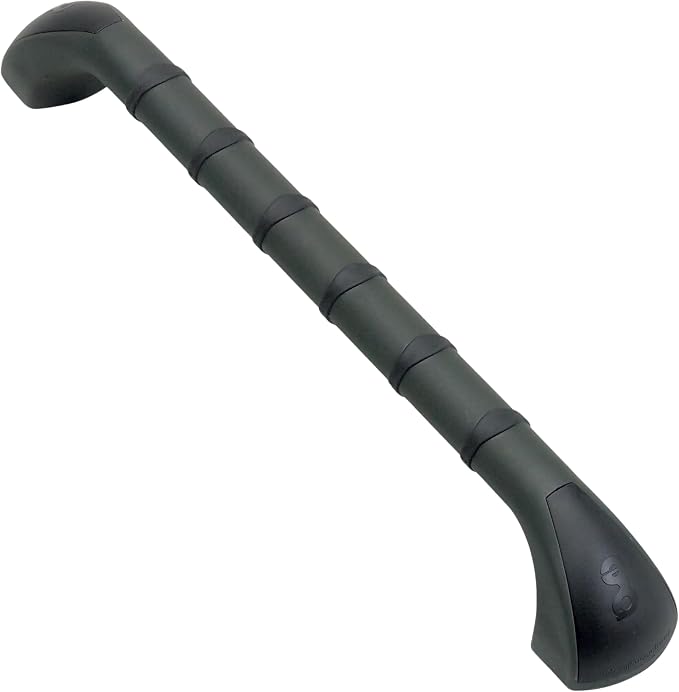
Recommended — Homecraft/Aidapt Prima Outdoor Grab Rail, 18", green/black
Purpose-made for outdoor use, genuinely weatherproof.
View on Amazon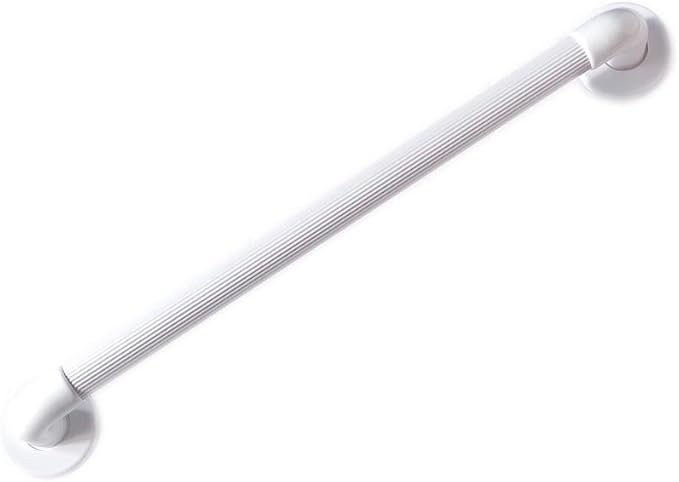
Budget alternative — NRS Plastic Fluted Grab Rail (white)
This is our usual internal rail (see next section) and a lot of people do use it outside, under a porch or somewhere sheltered. Being honest with you: it isn't officially rated as weatherproof, so if it's getting direct rain and sun for years, the outdoor-specific rail above is the safer long-term choice.
View on AmazonInternal / around-the-home grab rails
For hallways, landings, next to a step, or anywhere in the house that isn't wet.
Recommended — NRS Plastic Fluted Grab Rail, white
One listing covers 12", 18" and 24" lengths — pick the length to suit the space. The fluted grip is easy on the hand, which matters if the rail's being used often or by someone with weaker grip strength.
View on AmazonBathroom & shower grab rails
Bathrooms need a rail that won't corrode and, ideally, one that copes with being gripped when wet.
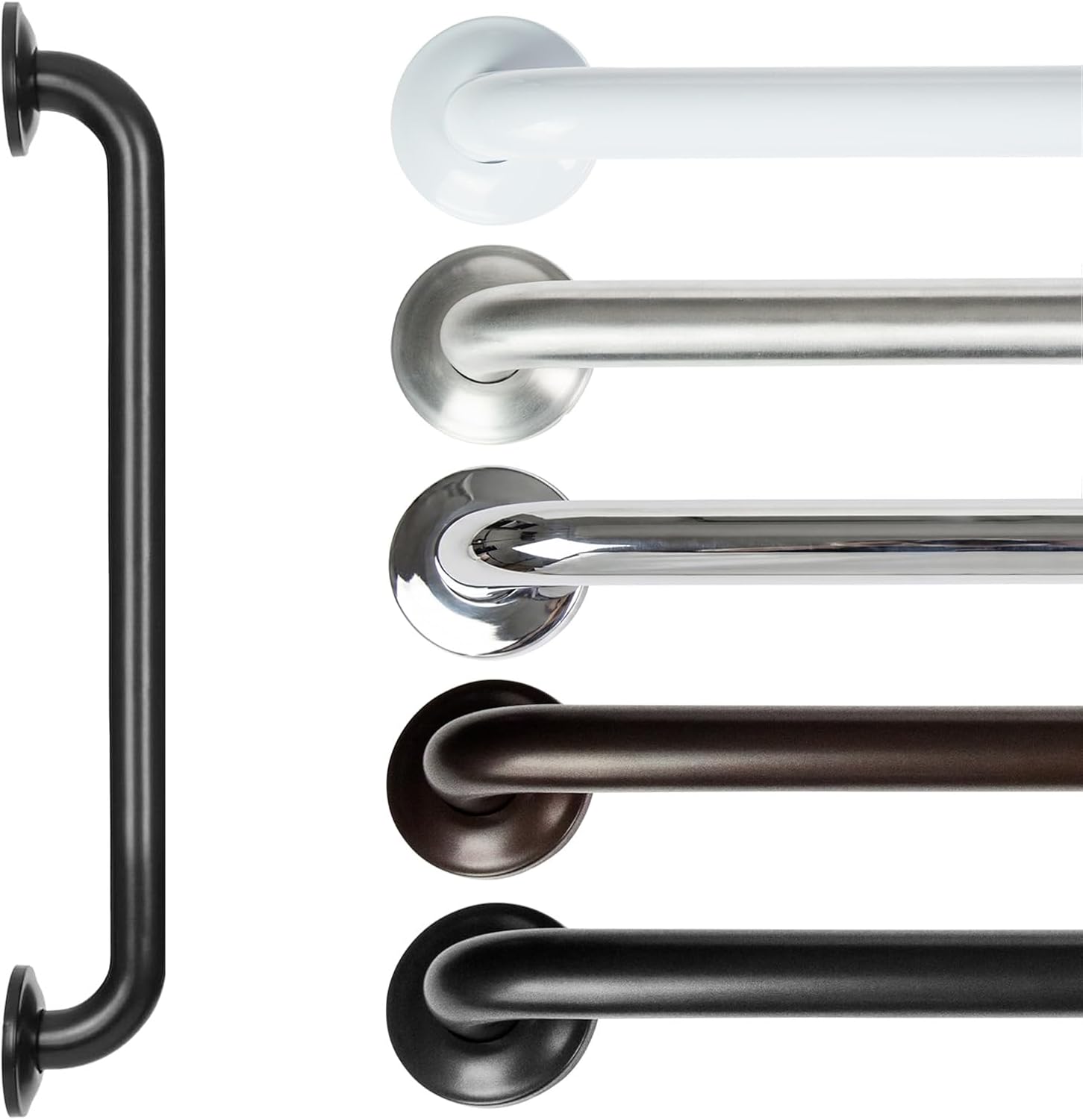
Recommended — Vive Grab Bar, stainless steel
16" and 24" lengths, in black, white, or black satin. Stainless steel won't rust, and it's the rail I'd fit in any wet room or shower as standard.
View on Amazon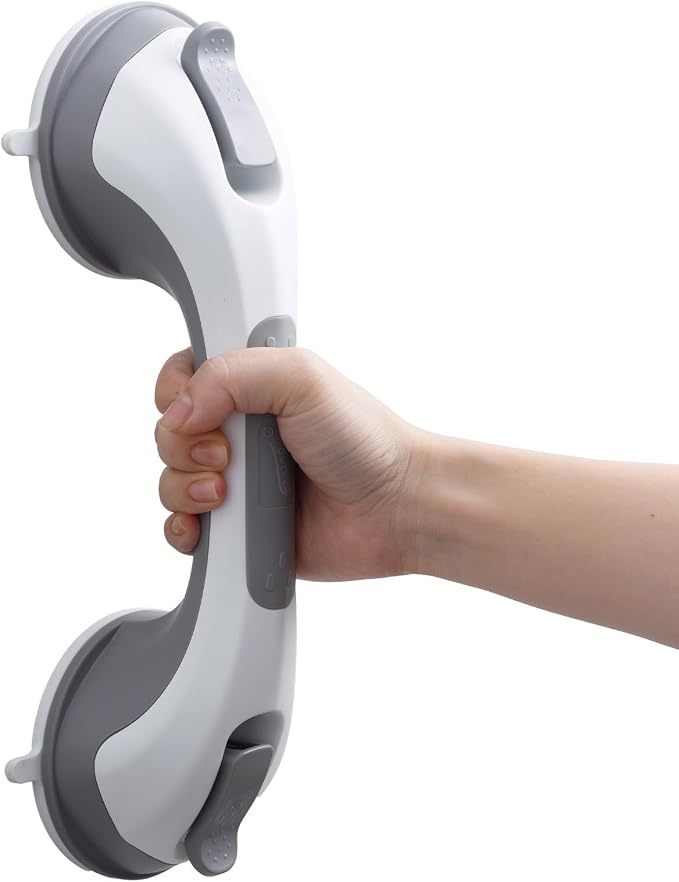
No-drill option — TAILI Suction Grab Rail
For situations where drilling isn't possible or wanted. Important honesty check: suction only works reliably on a smooth, non-porous surface — proper ceramic tile or glass. It will not hold on bare or painted plasterboard, textured tile, or anything with an uneven surface. If your wall isn't smooth tile, this isn't the option for you — go with a properly fixed rail instead.
View on AmazonStairway & newel-post grab rails
Fits around the newel post at the top or bottom of a staircase, giving something solid to hold onto exactly where people are most likely to lose their footing.
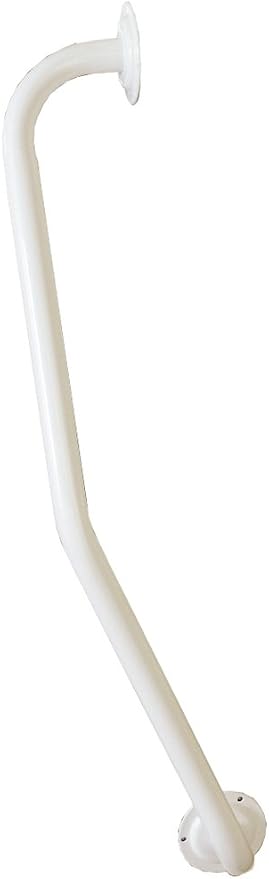
Recommended — NRS Newel Post Grab Rail, white, metal
"Handed" refers to which side the rail sits on as you face the stairs — check which one you need before ordering.
Worth knowing: these rails are also genuinely useful for getting safely on and off a stairlift seat, not just for using the stairs themselves. If a stairlift is fitted or planned, it's worth having one of these either way.
D-shaped rails
A heavier-duty rail, useful anywhere a straight rail doesn't suit the space as well, or where extra strength is wanted.
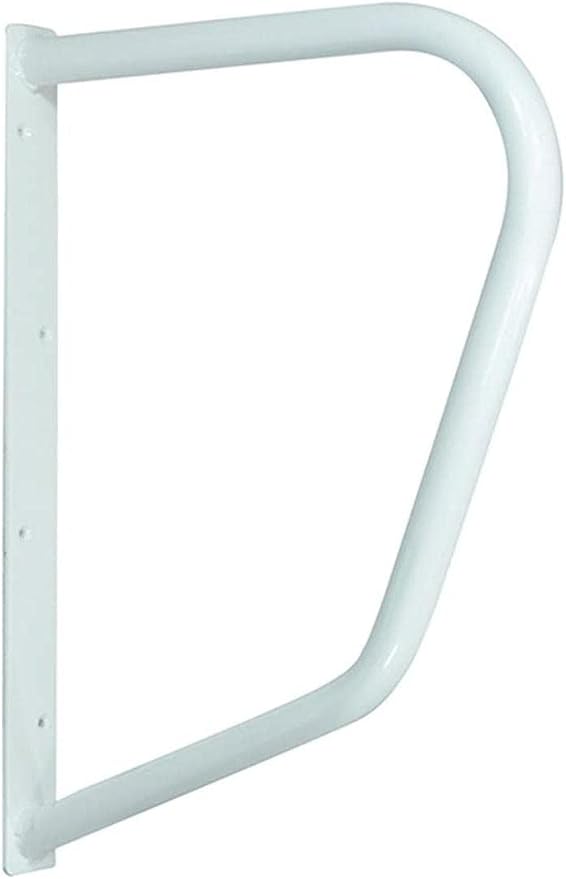
Aidapt D-Shaped Rail
These cost a bit more and have fewer reviews online than some of the other rails here, but that's down to being a heavier, more robust build rather than anything to worry about — I've fitted these myself and I'm happy to recommend them.
Fitting guide — get the wall right first
This is the part that actually keeps people safe. Before you even think about which drill bit to use, work out what's behind the wall, because that decides everything else.
Solid masonry behind plasterboard (dot-and-dab walls)
Very common in newer houses — plasterboard is stuck directly onto the brick or block behind it with adhesive "dabs," leaving an air gap in places. A standard wall plug can crush through the plasterboard in this gap and never grip anything solid.
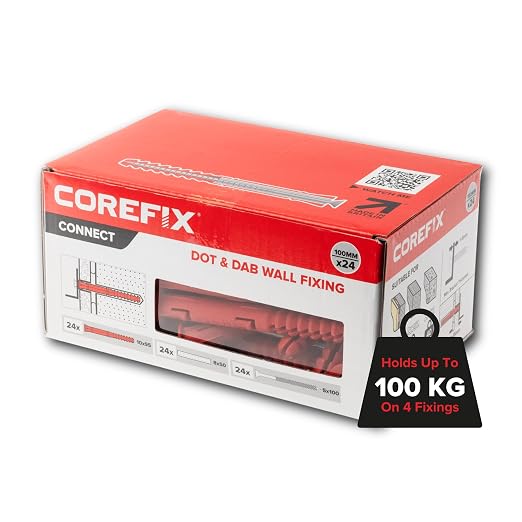
Use — Corefix Connect fixings
A steel-core fixing designed specifically to bridge that gap and transfer the load into the masonry behind, not the plasterboard. Rated to 55kg per fixing on dot-and-dab (40kg on aerated concrete), independently tested, and made in Britain. Available in a 4-pack for a single job or a box of 24 if you're keeping stock for the van. Not recommended for cantilevered brackets.
View on AmazonSolid masonry — brick, block, or stone
Where you're drilling straight into solid brick, block, or stone with no plasterboard gap to worry about.
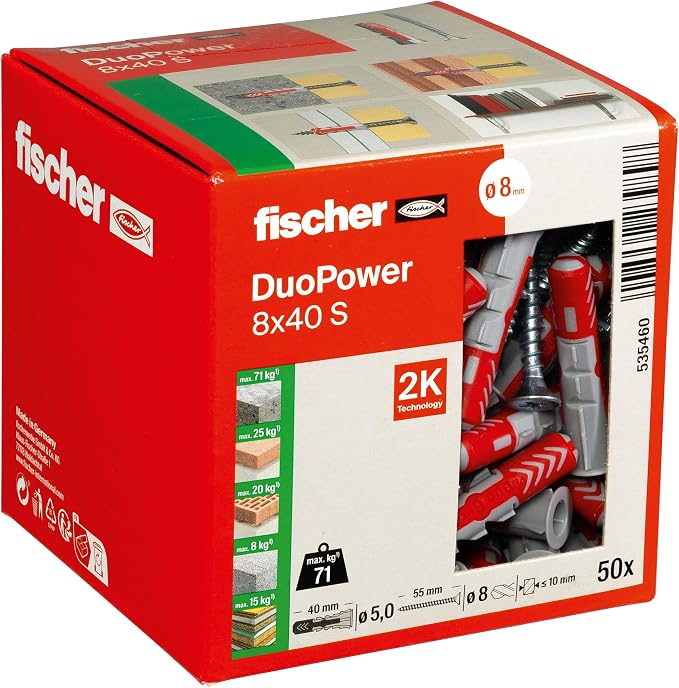
Use — Fischer DuoPower wall plugs
A self-adjusting two-component plug: it expands in solid material, folds in perforated blocks, and knots in plasterboard, so it copes with whatever it's actually going into. The 8x40 S size (50 plugs + 50 screws) covers most grab rail jobs; other lengths are available on the same listing if needed.
View on AmazonStud, timber-frame, or plasterboard-on-battens walls
If there's no masonry behind the plasterboard at all — a stud wall or a timber-battened wall — no wall plug is strong enough on its own, whatever size it is. A wall plug in plasterboard alone will not survive someone's full weight in a fall.
The rule here: find solid timber and screw straight into it. Use a stud/pipe/wire detector to locate the timber stud or batten, then fix directly into it with a wood screw — no plug needed at all. If there's no stud in the right position for the rail, the proper fix is to open the wall and add a timber noggin behind it before fitting, rather than relying on the plasterboard alone.
Tiled walls
If you're drilling through tile (rather than fitting a suction rail — see the bathroom section above), mark and drill the tile itself with a suitable bit at low speed to avoid cracking it, then proceed with whatever's behind the tile — masonry or stud — using the sections above.
If you'd rather have this done for you, fitting grab rails properly is one of my regular jobs.
See the full, up-to-date price list
Worth knowing: grab rails can only be fitted to a solid wall — fixings into plasterboard or a stud wall aren't strong enough to be trusted with someone's full weight, so that's always checked before booking.
Tools you'll need
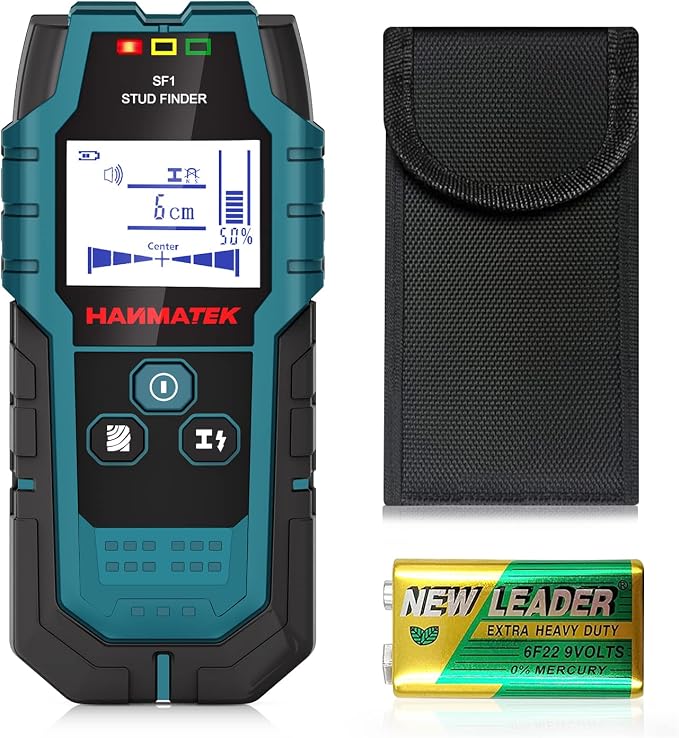
Stud/pipe/wire detector — HANMATEK SF1
For finding studs, pipes, and cables before you drill anything. A sensible mid-range option — if you want trade-grade reliability instead, Bosch's detectors are a step up in price but worth it for regular use.
View on Amazon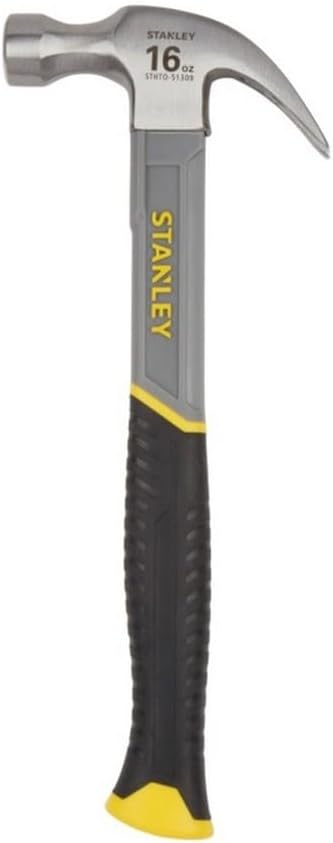
Hammer — STANLEY 450g Curve-Claw Fibreglass
For tapping fixings home and general use.
View on Amazon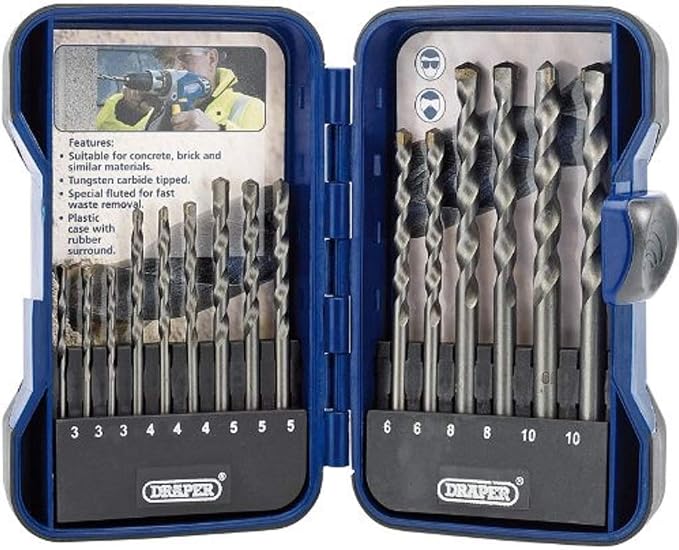
Masonry drill bits — Draper 15pc TCT Masonry Drill Bit Set
A good range of sizes in one set, for drilling into brick, block, and stone.
View on Amazon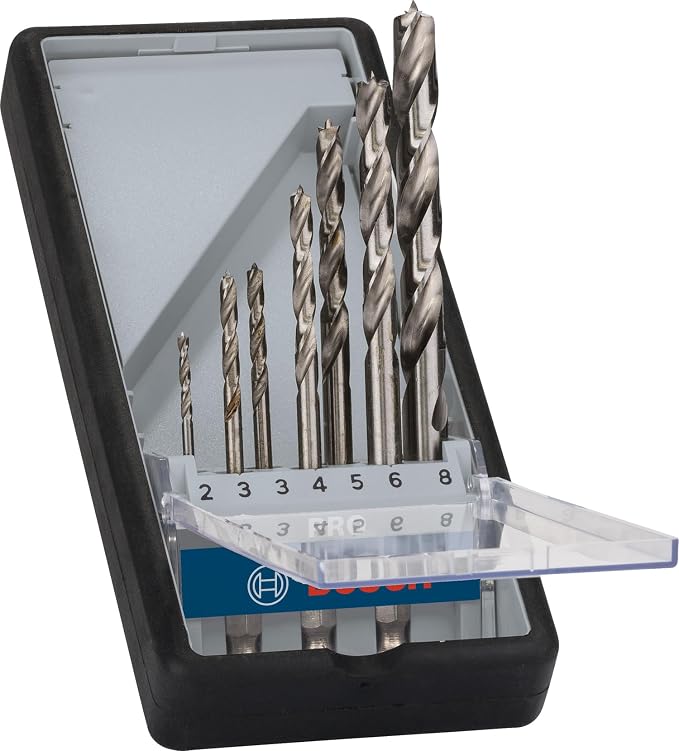
Wood drill bits — Bosch 7x PRO Wood Brad Point Drill Bit Set
Brad point tips give a cleaner, more accurate pilot hole in timber studs and battens.
View on Amazon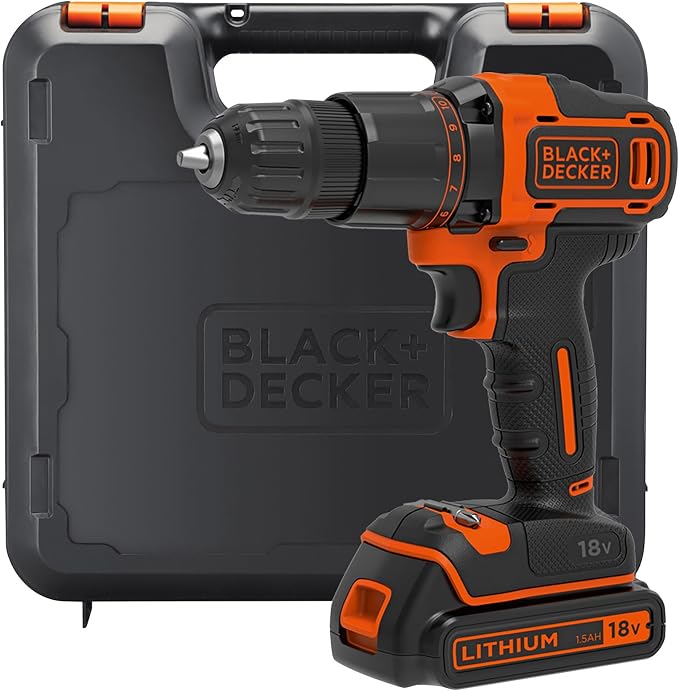
Combi drill — BLACK+DECKER 18V Cordless Hammer Drill, BCD700S1K-GB
Comes complete with battery, charger, and case. Handles both wood and masonry drilling, which covers everything in this guide.
View on Amazon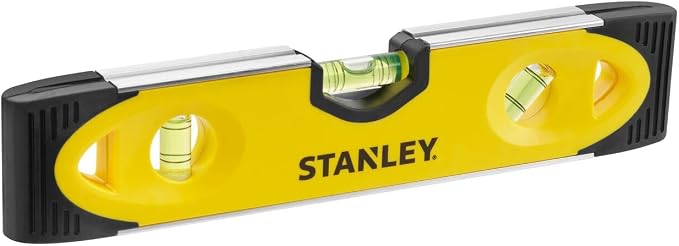
Spirit level — STANLEY Shockproof Torpedo Level, 230mm/9", 0-43-511
Magnetic plate lets you hold it against the wall hands-free while marking up. A rail that isn't level looks wrong and can feel awkward to use, so don't skip this step.
View on Amazon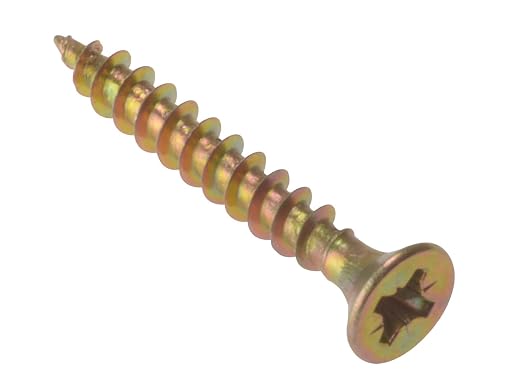
Woodscrews — ForgeFix Multi-Purpose Single Thread Screws, 5.0 x 50mm, Zinc, Box of 200
The right size to pair with both the 8mm and 10mm wall plugs above, and long enough to bite fully into the fixing behind most rail brackets. A box of 200 will last through plenty of jobs.
View on AmazonFixings — quick reference
| Wall type | Fixing |
|---|---|
| Dot-and-dab (plasterboard over masonry, air gap) | Corefix Connect |
| Solid brick, block, or stone | Fischer DuoPower wall plugs |
| Stud, timber-frame, or battened wall | Screw straight into the timber — no plug |
| Smooth ceramic tile / glass (no drilling wanted) | Suction rail (see bathroom section) — check the surface is genuinely smooth first |